Adding Audio To WordPress Using Amazon S3

This tutorial shows how to add audio that you produce or rip from a cd (Instructions on Ripping a CD on Windows). Once you have your audio file you can easily upload it to AWS (Amazon Web Services) to be used for delivery on your Wordpress website.


This tutorial (No audio) shows how to add audio that you produce or rip from a cd (Instructions on Ripping a CD on Windows). Once you have your audio file you can easily upload it to AWS (Amazon Web Services) to be used for delivery on your WordPress website. This tutorial uses the JW Player plugin to add the video to the post. Enjoy the video and leave any questions or comments below.

Boost Your WordPress Videos Using Cloud Technologies

Learn how to Boost Your WordPress Videos Using Cloud Technologies.

Watch the video above to learn how to use AWS (Amazon Web Services) with JW Player to boost your WordPress videos. Topics covered will include:

  • AWS S3 Setup/Use
    AWS CloudFront Distribution Setup/Use
    AWS Elastic Transcoder Setup/Use
    How to install the JW Player plugin
    Using the JW Player plugin in your posts

Neat Video Tutorial

A simple tutorial on how to use the Neat Video plugin for After Effects. This is one of the top noise reduction plugins available.

1. Select Your Layer
Make sure that the layer you are applying the noise reduction to is selected.
2. Click on the Effects Menu
3. Select Neat Video
Look down your list of effects and find the Neat Video plugin. Hover over the text and select Reduce Noise from the fly out menu.
4. Click Effect Controls
Click on the effect controls tab at the top left (Using the standard After Effects layout).
5. Click Options
Find the Reduce Noise effect in the effects panel. Click the text link for options.
6. Find a Uniform Area
Click and drag to select an uniform area on the frame that is showing. If you cannot find a uniform area, select an area that is dark and has the most noise. You can adjust the size of the selection area during this process.
7. Click Auto Profile
Click the auto profile button. The software will process your video and calculate areas of noise.
8. Quality Measurement
Notice the quality measurement on the right side of the interface. This tells the user how well the software feels it will be able to remove the noise in your video. The target should be about 80+ percent. This is hard to achieve when the video does not have a uniform area to select. It will stil do a good job with the noise at low percentages.
9. Click Noise Filter Settings
Click the noise filter settings tab to adjust the output of the noise filter.
10. Preview Toggle
While adjusting the settings it is helpful to toggle the preview button (This temporarily removes the filter). This is helpful to see how the video is being affected by the filter.
11. Luminance Adjustment
The adjusts how much reduction is applied to the video based on the luminance channel. Typically 60-80% is a good number.
12. Sharpening
Sharpening is like image recovery. When noise reduction is applied to video with any software interpolation occurs. This means that the software guesstimates the pixels the should replace the noise based on the other pixels in the image. This causes soft edges in the video. This adjustment corrects some of that softness. Typically about 20% is the limit for sharpening due to the unrealistic look it can cause.
13. Brightness
Sometimes when noise reduction is added it causes the video to become darker than the orginial. This adjustment at the bottom of the interface allows the user to birighten the video back up.
14. Apply
Once you have the desired look for your video you can apply the noise reduction filter by clicking the apply button. This will close the options window.
15. Continue working
Now that you have the filter applied you can continue working on your project. If you find that your video needs more adjustment you can edit the filter by clicking on the options link in your effects panel. Please note that any filter/effect that works on a per pixel level will increase your render times. This plugin is no different.

Neat Video Resources

Purchase Neat Video

Other Tutorials

User Guides

User Guides

What is WordPress?

What is WordPress

What is WordPress?

WordPress is a popular blogging software and CMS. It started out as a tool for bloggers to build blogging websites. Now it is often used to build websites other than blogs. In fact about 23% of websites on the internet use WordPress. There is two different types of WordPress and this is important to know. One kind of WordPress is WordPress.com and the other is WordPress.org. WordPress.com is owned by Automattic whose founder created WordPress. This version is hosted for you and has some limitations. WordPress.com is great for most blogging websites that don’t want to be responsible for the management of the code and dealing with a host. WordPress.org on the other hand gives you or your developer most of the responsibility for the site. You will purchase the hosting, you will download and install the software, and you will be responsible for the updates. This type of WordPress installation can offer more flexibility to modify and scale the site in the future. This software is very popular and has great community support and documentation. I recommend taking a look at the features of both and deciding which one is best for you. If you still are uncertain you should contact a developer such as Alpha Omega Design.

If you have questions about WordPress leave them in the comments below or contact us. Thanks for reading!

What is HTML5?

What is HTML5

What is HTML5?

HTML5 is commonly talked about amongst web designers, marketing agencies, mobile developers, etc. You may find yourself sitting in a meeting with a web designer or developer and they start talking about using HTML5 or you may be searching for a CMS theme and find one that says “Built using HTML5.” In order to appreciate what it is, lets’s debunk a couple of myths. First, HTML5 by itself does not provide animation. Second, CSS3 and jQuery are not part of HTML5 although they are commonly used in conjunction with HTML5.

So what is it? Here is the definition given by the W3C, the organization responsible for overseeing the HTML spec, “The 5th major revision of the core language of the World Wide Web: the Hypertext Markup Language (HTML).” All websites output their content into this core language called HTML. The web browsers that we use to surf the web can only read content that has been rendered via HTML. HTML5 is the newest spec for for the base language of the web. The reason that it is advertised so much is that this version allows for things like video and audio playback in the browser without Flash or other plugins, more semantic elements that more accurately describe the content that is in them, and new form features. This latest HTML spec has allowed designers and developers the give their clients cleaner and more interactive experiences. If your website is not using HTML5 Validator you should consider having someone look at it to see if it can be updated. HTML5 is beginning to help all of us be more creative and semantic in the websites and applications that we build.

If you have questions about this subject leave them in the comments below.

Thanks and God Bless!

What is a Domain Name?

What Is A Domain Name

What is a Domain Name?

Alpha Omega Design works with a lot of clients that need websites or have websites and domain names. Most people have heard the term “Domain Name” before but, we thought we would actually explain what it is and how it works. In order for us to truly understand what it is we must understand the humble beginnings of the internet. Originally websites on the internet we located with numbers called IP addresses and they still are today but, these numbers were hard to remember. You may have seen an IP address before and it looks something like this, 192.168.1.45, or similar. The XXX.XXX.XX.XX structure is common for IPV4 Address addresses. In response to this problem the Domain Name Service or System (DNS) was created. This system allows the IP address for a website to be translated into an alphanumeric string ie. www.somesite.com. When you start to create a business or ministry this is something that you should consider during the naming phase of your business or ministry. Since domain names are words, two websites cannot have the same domain name. Alpha Omega Design can help you with the domain name searching process if you need it. Once you purchase a domain name it may take some time before you are able to access that domain name due to a process called replication. During this process the worldwide database that comprises the DNS (Domain Name System) is populated with the IP address and the appropriate name that points to it. If a domain name has a lapse in payment to the domain name provider and the domain name is suspended or “parked”, once the domain name provider reinstates the domain it will take some time before the domain name will be accessible throughout the internet. Once your domain replicates everyone will be able to enjoy your great website.

If you have a question about your domain or getting a domain let us know what it is and we will try our best to answer it for you.

Thanks and God Bless!

What is a CMS?

What is a Content Management System

What is a CMS (Content Management System)?

A CMS also known as a Content Management System is a piece of computer software that runs on a web server and allows content editors to manage their website content. A content editor is anyone who will make changes on a website whether it’s the secretary or the owner of a company. There are different types of CMSs for different uses IMHO (In my humble opinion) although some designers and developers have one CMS that they feel is good for all of their projects. This is often related to the size and complexity of the project. Some of the best CMSs are WordPress, Joomla, Drupal, Expression Engine, and Text Pattern. Alpha Omega Design has used WordPress, Drupal, and Joomla in past projects but, we almost exclusively use WordPress now as it is able to handle very large and complex projects.

So, what is it? A CMS gives the content editor an easy to use interface for editing content often without any need to know HTML, CSS, or JavaScript. Although you don’t necessarily need it I recommend that content editors have a basic understanding of at least HTML. You may hear someone say “Does your website have a WYSIWYG (Pronounced wisiwig) editor?” WYSIWYG editors are a common part of all CMSs and this is the area where you add text, images, and videos. If you have used Microsoft Word you can likely use a WSIWYG editor in one of the CMSs mentioned here. In addition to giving the editors an easy interface to use, the CMS also provides the designers and developers a more efficient way to mange the websites design and development. The CMS will often allow parts of the website to be duplicated with one management point. This helps the site maintain more consistent design and features. There is a lot more that CMSs do but I have covered the most important here to give you a more informed decision making process.


I hope this is helpful for your ministry, non-profit, or business. Thanks and God Bless!

 

What is a Network?

What Is A Network - What is Wednesday Blog

What is a network?

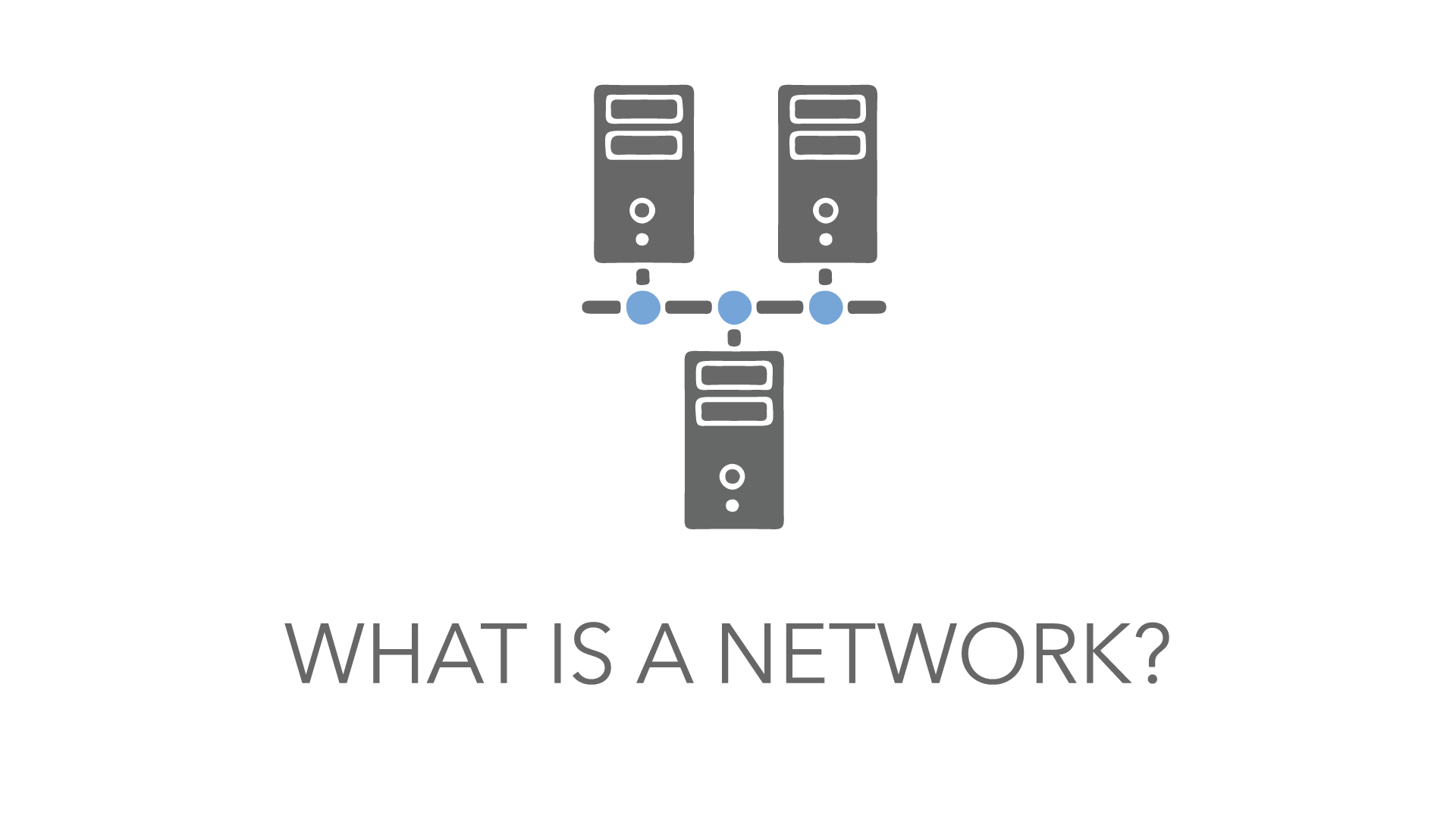
A network or computer network is a group of devices that allow computers and other devices to transfer data to each other. Sounds vague right? Well, there is a lot of technology that can go into a network. For the sake of this blog I will discuss a simple network like your home or small business network. A network typically has a ISP or Internet Service Provider that manages on a high level the connection of the network to the rest of the available networks. In a residential sense your ISP may be Charter Communications, AT&T, Direct TV, or other ISP. this is the company that you pay your internet bill to. The next thing on a network that you will have is some kind of network switch or router or both in some cases. In your home you probably have a network switch. This makes sure that you get the data that you are requesting from websites or other devices on your network. Then you have a computer, Smart TV, Roku, Apple TV, or internet connected devices that you may have in your home “Network.” This same basic model is what networks around the world are based on albeit on a larger scale. Networks not only contain routers, switches, and computer but they also include servers which we discussed in a previous blog. I hope this helps you understand a little more about the technology around you. If you have a comment or question post in the comments section below.

What is Hosting?

What Is Hosting

What is Hosting?

Today I am going to discuss what hosting is and how it is used. Hosting is a service that a company provides that allows you to store website and other files on a server that they have and manage. Most websites on the internet use some sort of hosting provider (A company or person that provides hosting) to host their websites files. Hosting, in most cases, involves a monthly or yearly fee for the service. Hosting providers often have different levels of hosting that you can buy. The different levels of hosting are often tied to how well the server performs and how much space the company will allow you to take up on the server. Most hosting providers are using cloud servers now to provide hosting that is faster and more efficient the subsequent side effect is lower cost to you the customer. If you have questions about hosting please let us know in the comments below.

Some Common Hosting Providers

I hope this helps you understand a little more about hosting and how it works. Be sure to share this on social media so others like you can get their questions answered also. Thanks and God Bless!
What Is A Server?

What is a server?

What Is A Server

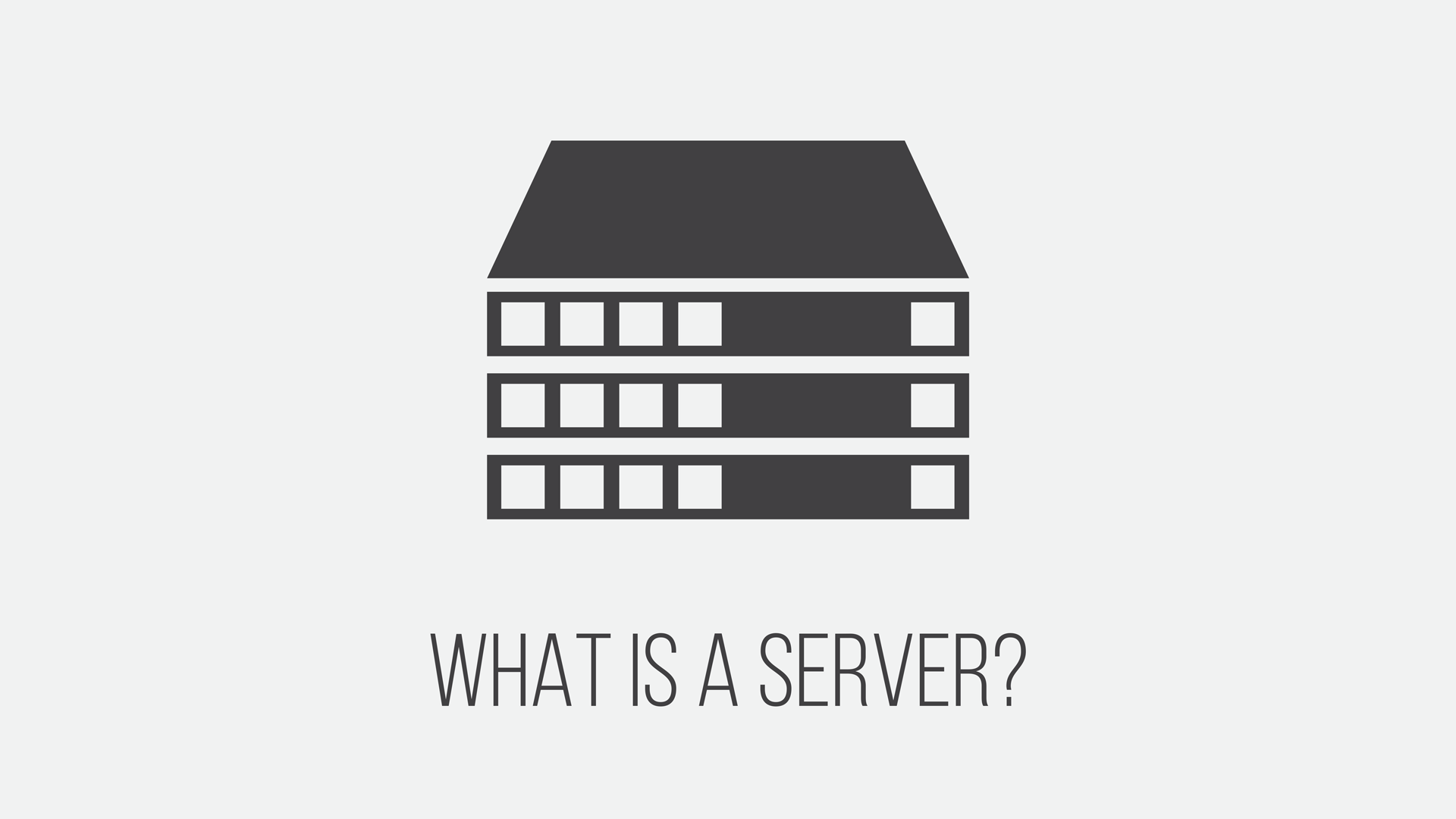
In short, a server is software that runs on a computer used to serve data to clients (other computers). Servers come in a lot of different models and use different operating systems just like PC’s that you would see at Best Buy. Most servers look different than your average PC, they are often not very tall about 19″ wide and fairly deep. This is because servers are typically used in equipment racks so the small form factor allows data centers to put a lot of servers in smaller spaces. The graphic above is an illustration of three servers and this is commonly how they are stacked in an equipment rack. Servers are typically very focused in the tasks that they accomplish. For instance, this website is running on a web server. This type of server is built for running websites. There are other types of servers other than web servers, in fact, there are a lot more. Some of the other types of servers include application servers, database servers, file servers, media servers, and mail servers to name a few. It takes a lot of “behind the scenes” action to make the technologically advanced world that we live in work. Servers are part of the core of many services and technologies.

Server Operating Systems

Some of the most common server operating systems are :

Common Server Applications

Some Common Server Applications are:

I hope that this gives you enough to handle those “techies” at the coffee shop. If you have questions please leave them in the comments.